Retatrutide 10 MG – Multi-Receptor Peptide for Metabolic & metabolic studies Research
Product Description
Retatrutide – Triple Receptor Agonist Peptide for Energy Balance and Metabolic Regulation
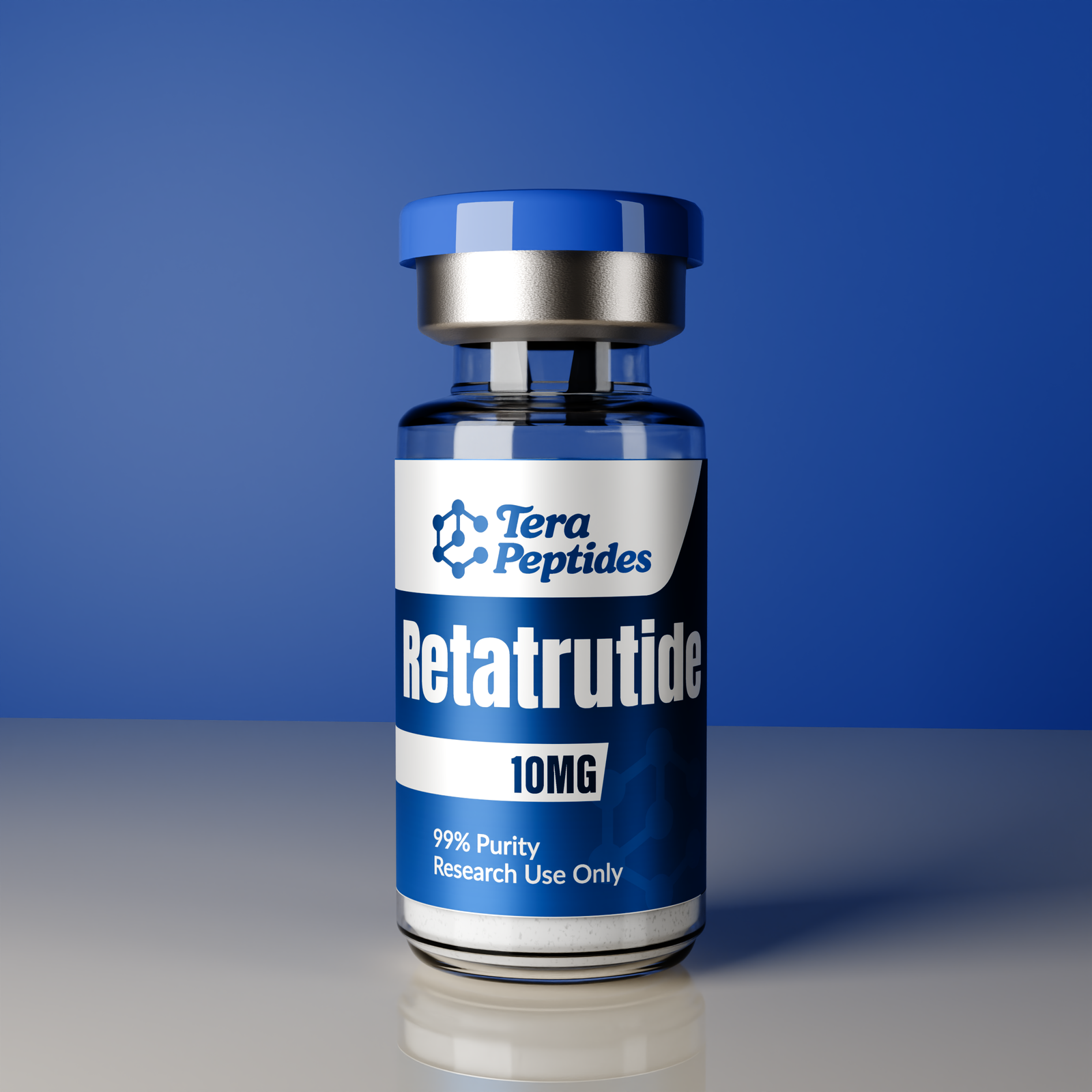
Composition: 10 mg Retatrutide (lyophilized peptide powder)
Category: Peptide
Form: Vial with freeze-dried powder
Administration: Subcutaneous research application (requires reconstitution)
What is Retatrutide?
Retatrutide is a next-generation long-acting peptide that simultaneously binds to three key metabolic receptors — GLP-1 (Glucagon-Like Peptide-1), GIP (Glucose-Dependent Insulinotropic Polypeptide), and Glucagon receptors.
This multi-agonist mechanism positions Retatrutide at the forefront of metabolic and obesity research, with potential implications for metabolic regulation studies, glucose balance, and lipid metabolism.
By engaging multiple complementary pathways, Retatrutide investigated for influence on energy expenditure, associated with satiety, and supports influenced glycemic and lipid profiles in preclinical and clinical studies exploring obesity and insulin resistance.
➡️ Ideal for research in energy regulation, metabolic studies, and multi-pathway metabolic modulation.
Key Research Findings
- Triple Receptor Activation: Simultaneous stimulation of GLP-1, GIP, and Glucagon receptors investigated for influence on metabolic flexibility and energy output.
- Appetite & Energy Regulation: Acts on central appetite-control centers while modulating thermogenesis and caloric expenditure.
- Glucose & Lipid Metabolism: investigated for effects on insulin pathway research and supports support tissuethy lipid turnover and oxidation.
- Body Composition: Investigated for its potential to studied for modulation of adipose tissue while maintaining lean body mass.
- Synergistic Mechanism: Combines the satiety and glucose-control benefits of GLP-1 and GIP agonism with the lipolytic action of glucagon signaling.
Mechanism of Action
Retatrutide binds to multiple receptor classes involved in metabolic homeostasis.
GLP-1 and GIP agonism regulate appetite, insulin release, and glucose balance, while glucagon receptor activation associated with fat oxidation and modulated energy expenditure.
Together, these pathways create a coordinated metabolic effect that investigated for influence on overall energy balance and metabolic regulation studies.
Dosage and Application
Reconstitute with bacteriostatic water before use.
Commonly referenced research protocols: 0.25 – 1.0 mg per application, used in subcutaneous research models depending on study design and duration.
Frequency: typically 1 – 2 times weekly in long-term metabolic studies.
Store the reconstituted solution in a refrigerator and use within 30 days.
Storage Instructions
- Store at 2–8 °C (36–46 °F)
- Protect from light and moisture
- Do not freeze
- Avoid temperature fluctuations
Why Choose Retatrutide?
Retatrutide represents a breakthrough in metabolic peptide research through its triple-agonist receptor profile.
By engaging GLP-1, GIP, and Glucagon pathways concurrently, it offers a comprehensive approach to studying energy homeostasis, satiety signaling, and lipid metabolism.
Its unique receptor synergy and strong early-stage data make it one of the most advanced peptides in metabolic and weight-management studies.
Explore the potential of Retatrutide 10 mg for cutting-edge research in multi-pathway metabolic modulation, energy balance, and metabolic regulation studies.
Technical Specifications
- Product Code: RETA-10MG
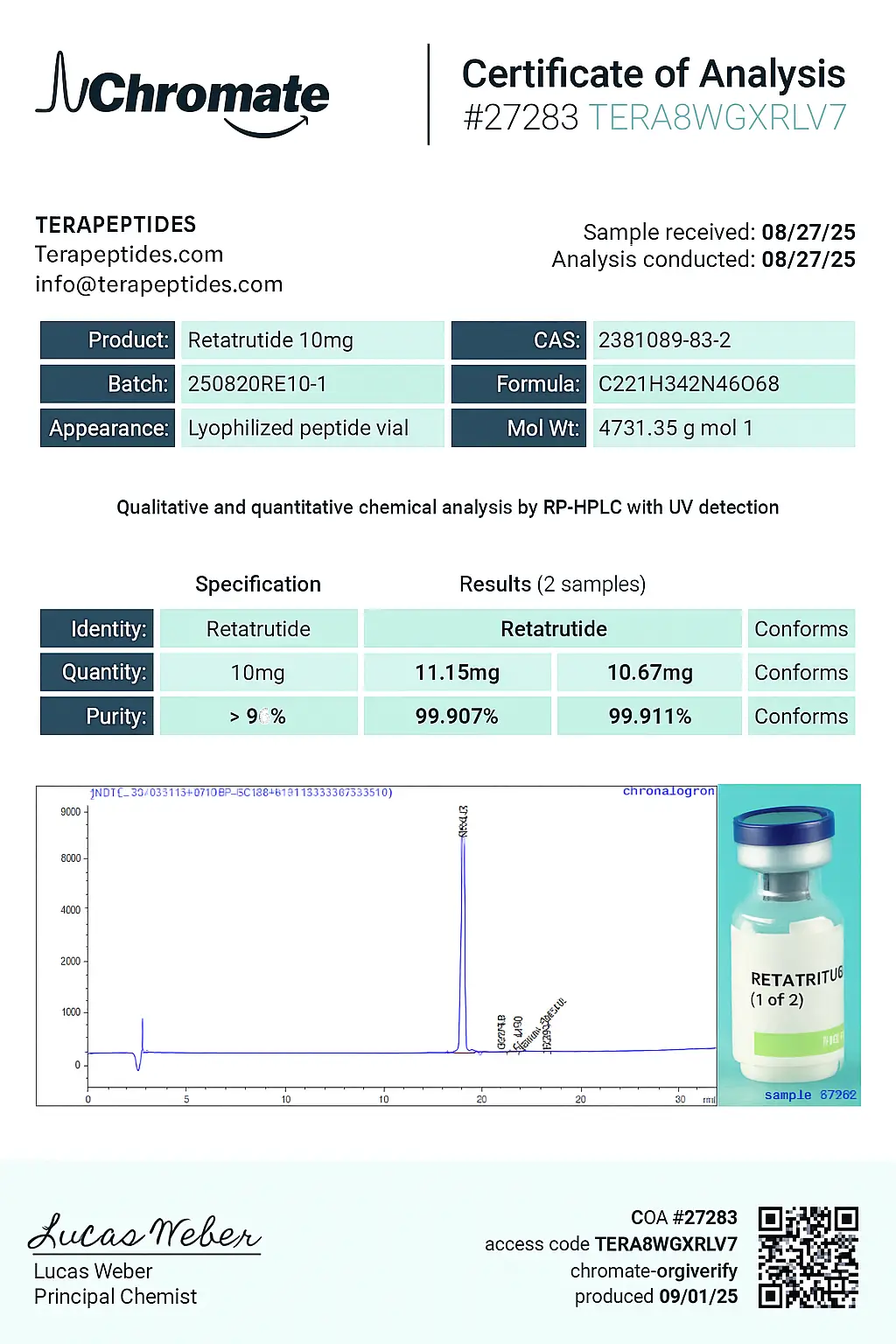
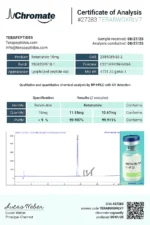
- Purity: ≥ 98% (HPLC)
- Form: Lyophilized powder
- Storage: –20 °C (before reconstitution), 2–8 °C (after reconstitution)
- Stability: 2 years lyophilized, 30 days reconstituted when properly stored
Quality Assurance
Each batch undergoes analytical validation including:
- HPLC analysis for purity verification
- Mass spectrometry for molecular identity confirmation
- Endotoxin and sterility testing for research-grade consistency
References and Further Reading
For comprehensive data, refer to peer-reviewed publications on GLP-1 / GIP / Glucagon receptor co-agonists available through PubMed and other scientific databases.
All peptides are manufactured according to current research standards and laboratory best practices.



Reviews
Clear filtersThere are no reviews yet.