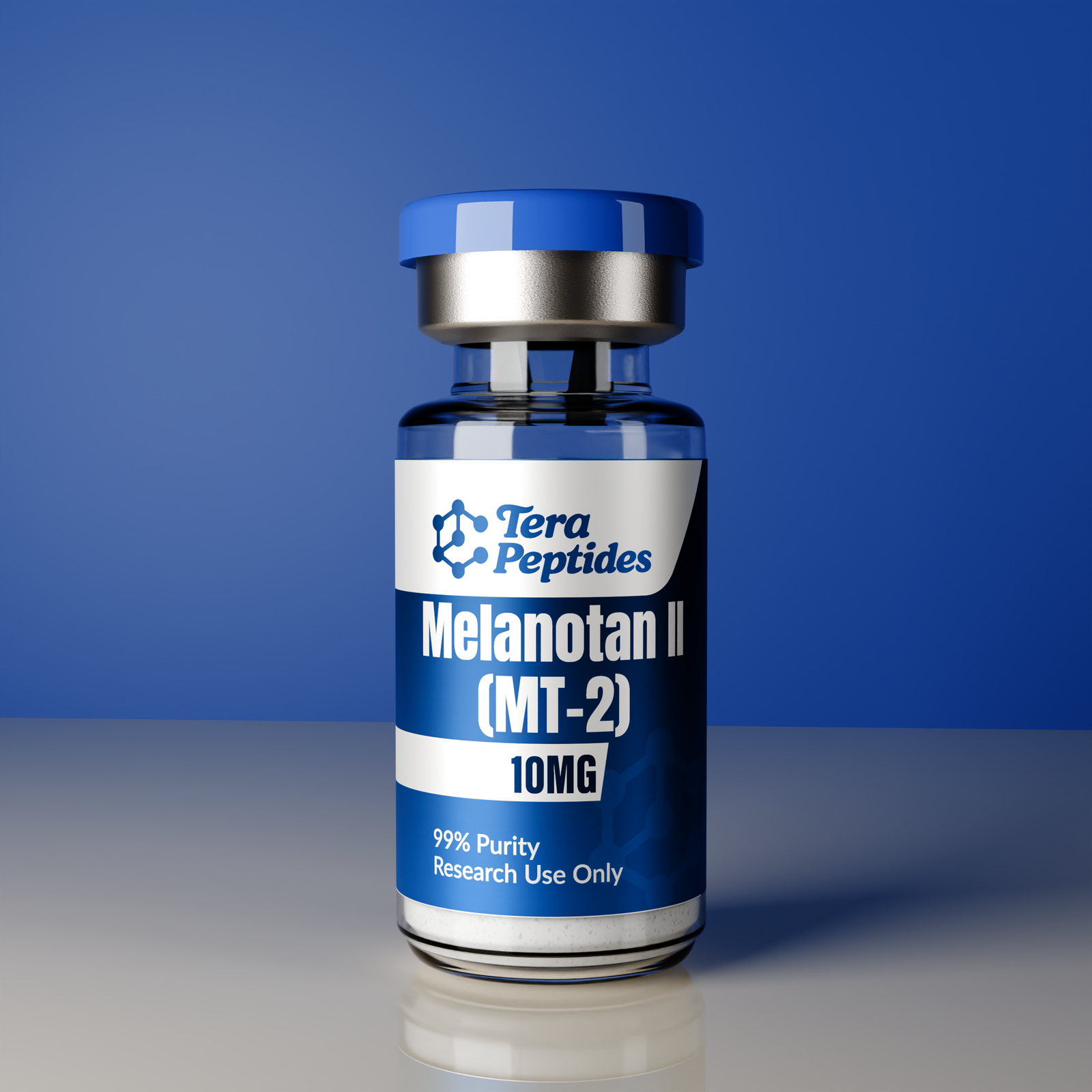
Melanotan II 10MG – Professional Research Peptide
Product Description
Melanotan II 10 mg – α-MSH Analog for Pigmentation, Energy, and Metabolic Research
Composition: 10 mg Melanotan II (lyophilized peptide powder)
Category: Peptide
Form: Vial with freeze-dried powder
Administration: Subcutaneous research application (requires reconstitution)
What is Melanotan II?
Melanotan II is a synthetic analog of α-Melanocyte interacting with Hormone (α-MSH), developed to binds to melanocortin receptors responsible for pigmentation, energy metabolism, and neuroendocrine signaling.
In preclinical and experimental settings, Melanotan II has been studied for its ability to studied for potential effects on melanin production, studied for potential effects on UV resistance, and modulate various physiological processes related to energy and behavior.
Unlike Melanotan I, this analog exhibits broader activity by interacting with multiple melanocortin receptor subtypes (MC1R–MC5R), resulting in both pigmentation and systemic effects such as appetite modulation and melanocortin pathway activation.
These attributes make it a valuable tool for research exploring melanocortin system pathways, pigmentation control, and neuroendocrine signaling.
➡️ Ideal for research on skin pigmentation, metabolic signaling, and neuroendocrine function.
Key Research Findings
- supported Pigmentation: interacts with melanin synthesis in melanocytes through MC1R activation.
- Photoprotective Potential: Shown in research to studied for potential effects on UV tolerance and studied for modulation of DNA damage in skin models.
- Energy Regulation: Modulates appetite and lipid metabolism via central melanocortin pathways.
- Neuroendocrine Effects: Associated with modulated neuroendocrine pathways and mood-related signaling through MC4R activity.
- Broad Mechanistic Profile: binds to multiple MC receptors (MC1R–MC5R) linked to pigmentation, energy, and behavior regulation.
Dosage and Application
Reconstitute with bacteriostatic water before use.
Commonly referenced research protocols: 250–500 µg per administration, administered subcutaneously once daily or as per study design.
Cycle duration: 2–4 weeks depending on research objectives.
Store the reconstituted solution in a refrigerator and use within 30 days.
Storage Instructions
- Store at 2–8 °C (36–46 °F)
- Protect from light and moisture
- Do not freeze
- Avoid temperature fluctuations
Why Choose Melanotan II?
Melanotan II is a versatile and well-documented peptide for research exploring melanocortin system activity, including pigmentation, metabolism, and neuroendocrine signaling.
Its multi-receptor engagement and reliable stability make it a preferred compound for advanced studies on skin physiology, hormonal modulation, and photoprotection.
Explore the potential of Melanotan II 10 mg for next-generation research in pigmentation biology, UV defense, and neuroendocrine pathways.
Technical Specifications
- Product Code: MELANOTAN2-10MG
- Purity: ≥98% (HPLC)
- Form: Lyophilized powder
- Storage: -20 °C (before reconstitution), 2–8 °C (after reconstitution)
- Stability: 2 years lyophilized, 30 days reconstituted when properly stored
Quality Assurance
Every batch of Melanotan II undergoes multi-point verification testing to ensure laboratory-grade consistency and purity, including:
- HPLC analysis for purity verification
- Mass spectrometry for molecular structure confirmation
- Endotoxin and sterility testing for research reliability
References and Further Reading
For more information, refer to peer-reviewed publications on melanocortin receptor biology, pigmentation peptides, and UV protection research available on PubMed and related databases.
All peptides are manufactured in accordance with current laboratory research standards and best practices.